How to organise an author event programme
For famous authors, publishers organise launch events and extensive book tours. You see the dates on their Instagram and all those impressive photos of signings.
But if you are a debut or mid-list author, published by a small press, or self-published, can you ever aspire to a series of author events?
I believe you can, but it just takes a little bit of planning and persistence.
Why bother with author events?
If you are purely selling eBooks on Amazon and other online retailers, maybe you should focus on digital marketing.
But if you want to sell paperbacks in bookshops, then in person events can make all the difference. So, what can author events do for you as a non-famous author?
• Sell books – after listening to you speak in person, people in the audience will feel a stronger connection to you and the content of your book. They are then more willing to buy a book, with the added bonus of having it signed, with a personal dedication.
• Create content – photos of authors interacting with readers, whether speaking at an event or one to one at a signing table, make for good content for social media or your website.
• Build relationships with booksellers – author events get readers into a bookshop. People may buy more than one book on the night and might then return as a regular customer. If you as an author deliver good events, a bookseller is more likely to put your book on a table or in the window!
• Grow your email list – some of the readers you chat to may be willing to join your email list – for updates on the background to your book, or news of your next project.
• Widen your network – there may be other authors in your genre in the audience, or people with expert knowledge. I have connected with other hist fic authors, and also local historians through events.
• Audience feedback – readers will share what they enjoyed about your book, or who they would compare it to. This refuels your creativity for the next project – and ideas for your marketing. It’s simply the best kind of audience research.
• Awareness – even those people who didn’t make it to your event may see your marketing and remember your name or the cover of your book. So, they may be more likely to buy it in future.
How to target your efforts with author events
Events involve a good deal of organisation and personal energy. Therefore, it pays to be focussed. My novel Copperopolis is set in 19th century Swansea, Wales, and has strong maritime content. I have focussed my events in the Swansea area, and with audiences interested in history and sailing. Plus, I have targeted events in my local area – North London.
I don’t want to be carting books around and selling them myself more than I have to. I decided to focus on bookshops and libraries, and events where someone else was prepared to sell books.
Different formats for author events
Consider what type of events suit your personality and skills.
• Illustrated talks and presentations – I write historical fiction, so history societies and libraries are interested in the background research into the historical setting. Yacht clubs were interested in the technicalities of sailing a three-masted square rigger around Cape Horn. I have plenty of appealing images from my research – paintings, photographs, documents - to draw attention. And I have also talked to groups of writers on my experience of marketing my books.
• In conversation/ fireside chats. Some bookshops will find another author or journalist to “interview” you with some pre-arranged questions. This is a more informal setting, and you don’t need visuals.
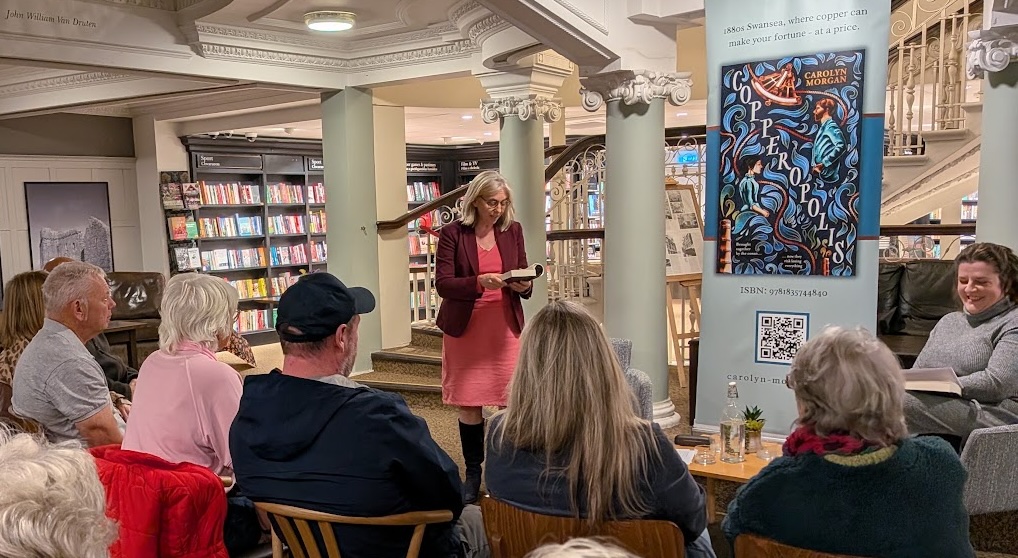
• Readings/ audience Q&A – just the author, reading from the book, providing background then taking questions. Lots of people love a more interactive format – and it builds a closer connection with you as the author.
• Book fairs – here you just have a stall alongside other authors and wait for readers to find you. This can make for some deep 1-1s, although you may also have quiet patches.
• Literary festivals and panels – at a larger event you may be on stage with other authors talking about a common theme in your books and then taking questions.
How to approach venues
• Consider what your event can do for the venue. Bookshops want sales and new readers. Libraries want more readers and also like to promote authors. Organisations want interesting content. Look at their current event programme to get a feel for the type of events they run.
• Send a concise email pitch – provide your credentials, information about your book and what content you can provide. Suggest a convenient time to drop in with a copy of the book for a chat. Remember they are assessing you as well as the book – so make sure you come across as professional and articulate. And if you have your own audience to bring, from social media or email lists, say so.
• Let the venue advise on the type of event/ time slot that works for their audience
How to market your events
• Create some good images – such as you with your book, or images that reflect the content. Share these with the venue and discuss how they usually promote – e.g. an online poster, Eventbrite, social media etc…
• Provide copy for all their marketing to make it easy for them (always check the word count).
• Plan your own marketing – I found that networking with local organisations e.g. history societies, writers groups, helped a lot in social media and email promotion.
• Do far more marketing than you could possibly imagine. You may need to reach hundreds of people to have a dozen turn up on the night. Don’t rely on the venue – try to work in partnership with them. I have created Instagram posts for collaborations with bookshops and organisations - these can reach thousands of views and bring in new followers.
• List your events on your website, social media, email newsletters, Substack.
• Send personal emails to people you know who are local and interested, such as other organisations you are targeting for events – they can see you in action.
• Even the people who don’t show up will know about your event and may buy a copy.
Planning the event – and on-the-day tips
• Have some point-of-sale materials – I ordered a pull-up banner and some A4 cards of the cover, plus bespoke bookmarks with my website details and ISBN.
• For a launch event, will you provide drinks or snacks?
• If you are being interviewed, chat to the interviewer over zoom and agree some questions. Make notes or cards for yourself so you feel relaxed on the day.
• If in a bookshop, they will sell your books. If the event is run by another organisation, sometimes you can ask a local bookshop to turn up with stock and a card reader. This can be easier for the author than bringing your own copies, and it builds your partnership with local bookshops.
• Think about the visual set-up – and take pictures of you with your banner, books, table, POS for social media. Have a designated photographer – a friend or the organiser – and brief them in advance.
• Arrive early, chat to the bookseller or event organiser and fine tune the layout.
• Don’t talk for too long – 20-30mins is fine. Practice any readings and keep them to 2-5 mins max. Allow time for audience Q&A. Plant a friendly question to get started.
• Allow time for 1-1 chats in the signing queue. This is the best time to ask people to join your email list for updates.
• Thank the organiser and let them keep bookmarks, A4 cards or other POS if they wish.
• Collate the photos and plan a follow up social media post – this is a prompt for people who didn’t make it to the event to go buy a copy.
• Reflect on what worked, make some notes for future events.
And don’t forget to enjoy yourself! After all those years alone researching, writing, editing and proofreading, I have always found it rewarding to chat to people who are interested in my book, or have read it.
More information:
See my events page for upcoming events
Reviews of my past events:
Mumbles Yacht Club, Swansea museum, Swansea Library
For more insights into my writing, publishing and marketing journey, plus book reviews and Swansea history, join my book club