How an authentic setting brings historical fiction to life
Why is setting important?
When a historical novel is described as immersive, it means the reader is transported to a different time and place and believes that the characters and their actions are real. To create this sense, the setting has to be authentic; even small anachronisms can shatter the illusion.
What do we mean by setting?
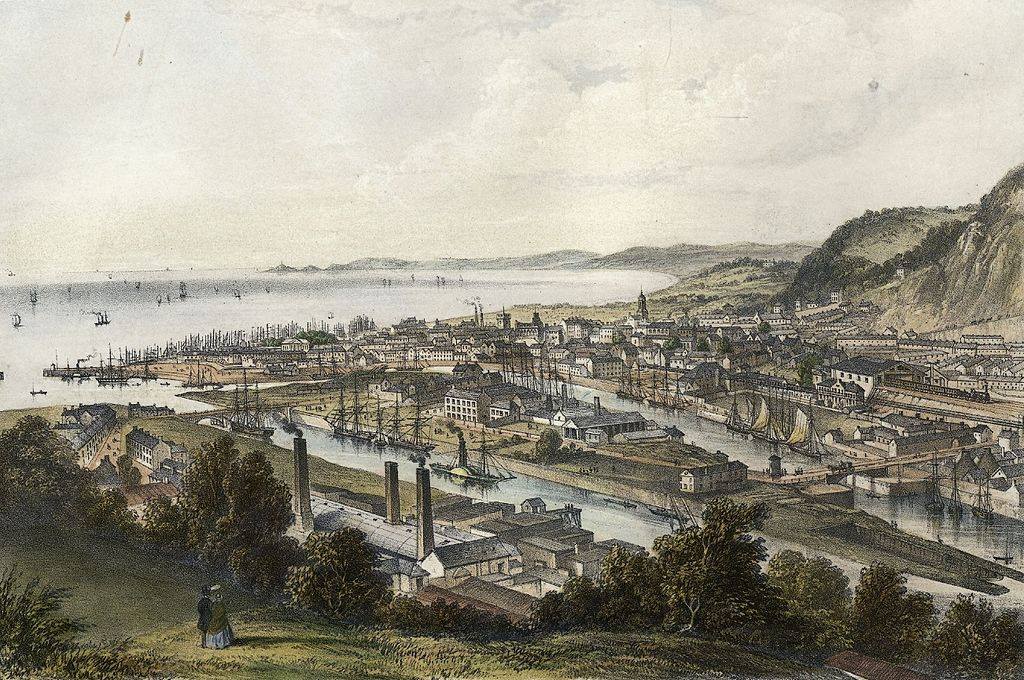
Setting starts with time and place, such as maritime Swansea in the 1880s. But there is so much more to consider.
• Where do people live, what work do they do and what tools and materials do they use?
• What do they eat and how is it cooked?
• What do they wear and how does it enable or restrict their movement?
• How do they travel around?
• What is the social structure – who has power and money and who does not?
• What language do they use, how do they refer to places, things or other people?
• What beliefs are important – religious, social structure, morality and what is right?
How to research a setting?
I’m a visual person, so I love to start with paintings, photographs, postcards and old maps. It’s surprising how much you can find online, but tangible objects such as clothes, tools of the trade, household objects help evoke the world people lived in day to day. So museum visits are as important as google. More on inspiration from tangible objects here.
Contemporary documents such as letters, newspapers, reports connect you to your characters world. I have my great-grandfather’s pilot record, with date stamps for every voyage he made from 1900-1912. I also saw the Lloyds ledger with the details of a shipwreck involving my great-great grandfather. Contemporary reports and articles provide an insight to the language people used, what was important to them, how they earned their money and what they spent it on.
Secondary sources such as history books, specialist blogs, and even PhD theses can be found online, and are great for filling in gaps in social history.
Visiting a place in your book’s setting – church, beach, town, port, house - can help you understand the geography, the buildings and how someone might move from one location to another. If part of your novel is set abroad, you may have to rely on online sources, but if you can travel, here are some tips on how to plan an overseas research trip.
How to write a good setting
Once you have all your visual materials gathered in one folder, and all your own notes in a book or a document, imagine your characters moving through the space, what they are wearing, what they notice, what other people are doing.
Based on your research into what people believed, what the power structures in society were, you can consider how your characters might react to a difficult situation, and the language they might use when talking to others.
I find it useful to write the full backstory of major and minor characters, so I understand where they came from and what drives them. Little of this ends up in the novel, but it guides their reactions.
Common setting pitfalls
When reading published historical fiction, I notice the elements that pull me out of the story, which jar or break the spell. Watch out for these in your own writing:
- Dialogue that is too modern – current colloquial phrases
- Characters with contemporary attitudes to women, people of other nations, animals, children, or who know too much about world events
- Technology that appears before its time (e.g. trams, telegraph, methods of payment)
- Words that would not have existed at the time (e.g. I had to excise “shimmy” in a scene from 1890 as it only came into use in the 1920s)
Good examples of setting in historical fiction
When reading, notice how details like clothes, food and dialogue are dropped in, and how characters reveal their attitudes by dialogue and how they react.
The Land in Winter by Andrew Miller: Set in the hard winter of 1963, this novel is not only impeccable in terms of the clothes, food, transport and workplace of the time. But the characters’ attitudes are accurate – casually racist and sexist, very class-conscious, and many traumatised by the long shadow of WW2.
Mermaid & Mrs Hancock by Imogen Hermes Gowar. Set in 18th century London, this evokes the clothes worn by heroine Angelica in sumptuous detail, plus the scandalous parties attended by high society.
Atmosphere by Taylor Jenkins Reid. Set in 1980s NASA, this documents in detail the training programme for astronaut candidates (ASCANs) their daily life and the shocking prejudice against women on the space programme.
Cecily by Annie Garthwaite. Set in the Wars of the Roses, this novel shows us how cold and inhospitable castles were, the expectations that noble women would breed multiple sons to die in war, and daughters to be married off for political gain. And the weight of religious ceremonies that meant walking barefoot in the winter mud to a distant church.
(Thanks to Imogen Hermes Gowar whose “Writing the past” course was a stimulating way to learn about building authentic settings).
Enjoyed this article?
Join my book club for monthly updates on new reviews and a behind the scenes look at writing historical fiction