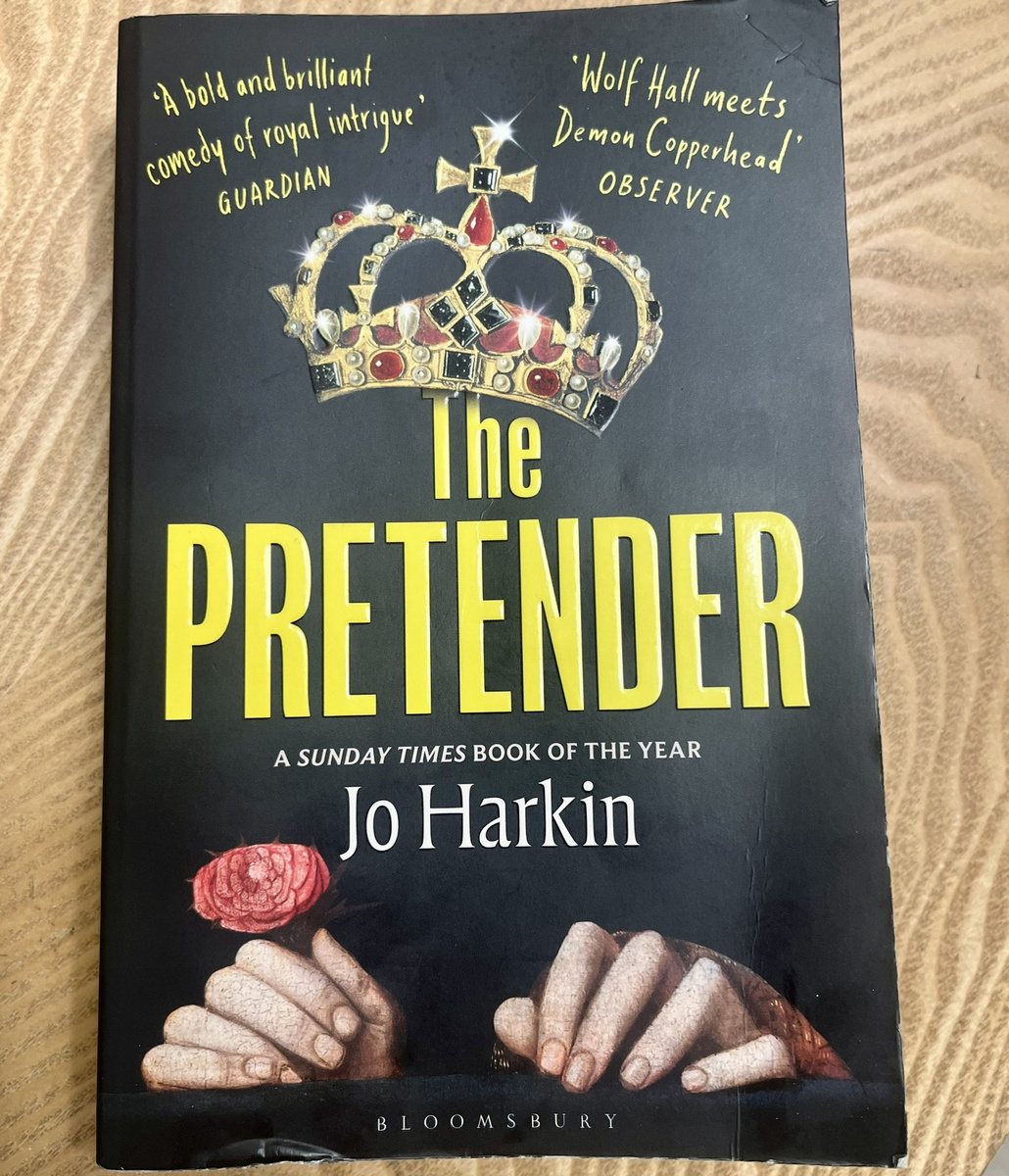
Review of The Pretender by Jo Harkin
Peasant boy plucked by Yorkists to disrupt King Henry Tudor learns how to plot and scheme as competently as any noble lord in a bawdy, rollicking medieval tale.
Story
England 1483. Ten year old peasant boy John is removed from his family and educated in Oxford. He is named by Yorkists as Edward Earl of Warwick, a pretender to the English throne and sent to Burgundy to be trained in the ways of the nobility. Then to Ireland where the preparations for a challenge to the throne are laid. After these go awry, Edward/Simnel is abandoned and must find his own way in the hostile court of Henry Tudor. He has to make terrible choices to survive.
Setting
The reader is landed squarely in the filth and squalor of late medieval peasant England, with all its hardships, merriment and coarse, earthy humour. Then to the opulence and politicking of the Burgundy court, as seen through the eyes of a guileless peasant boy. We sweep onto the lawless energy of Kildare’s estate in Maynooth, Ireland, and then the harsh, paranoid, enclosed world of Henry Tudor’s court. The contrast between the scheming, amoral nobles who believe themselves above the common people, and the resigned stoicism (and cynicism) of country folk and the servants is stark.
The language is a joy, adopting terms of the era – such as inquiet, maugre, dole – to describe characters’ emotions, as well as the details of food, clothing, housing, transport and daily customs. Humour is downright earthy, with liberal use of good old Anglo Saxon swear words, and plenty of imaginative names for parts of the body.
Character
Our protagonist mutates through several incarnations, like Virginia Woolf’s Orlando. John, the 10 year old peasant boy, becomes Edward and marvels at the customs of the Burgundy nobles, innocently aspiring to become a learned and wise king. By the time Edward reaches Maynooth, he is 14, more worldly wise, and starting to notice demosels (women), but still trusting the Yorkist advisors.
After the attempted coronation and disastrous battle, he becomes Simnel and abandons his scruples to use every trick he can to exact revenge on those who killed people he cared for. At the end, he is as ruthless and amoral as the nobles who used him as a puppet. But somewhere deep down, can he recover the innocent young John?
Of the secondary characters, Margaret of Burgundy and Joan of Kildare are the most notable, both women who find smart ways to deploy their limited power. And two earthy peasant women deserve mention: the no-nonsense Jennott of the early years, and the loyal Beatrice of the last act. Most of the men are contemptible schemers, although Kildare has a breezy charm, and Philip and Lincoln are noble innocents used by the warmongers in the pursuit of power.
My opinion
John/Lambert/Edward/Simnel is the narrator of the story, and like most historians, he may be taking liberties with the truth. But his voice is the heart of the novel, and by the end I was fully attuned to the vocabulary of the late fifteenth century. Many eternal political truths are contained in casual asides, such that I was tempted to read whole sections aloud to friends.
The bawdy energy and casual betrayals buoyed me up through the complex twists and turns of this take on English history. I was glad of the family trees in the back of the book and could have done with a cast list of the people who were not part of the houses of Lancaster or York.
The comparison of “Demon Copperhead meets Wolf Hall” may be glib, but it does sum up the strong viewpoint of an adolescent with no family growing up in a perilous world, coupled with the portrait of how an intelligent person can be tempted down the path of amoral revenge. Highly recommended.
Author/publisher page https://www.bloomsbury.com/uk/author/jo-harkin/
Enjoyed this review?
Join my book club for monthly updates on new reviews and a behind the scenes look at writing historical fiction