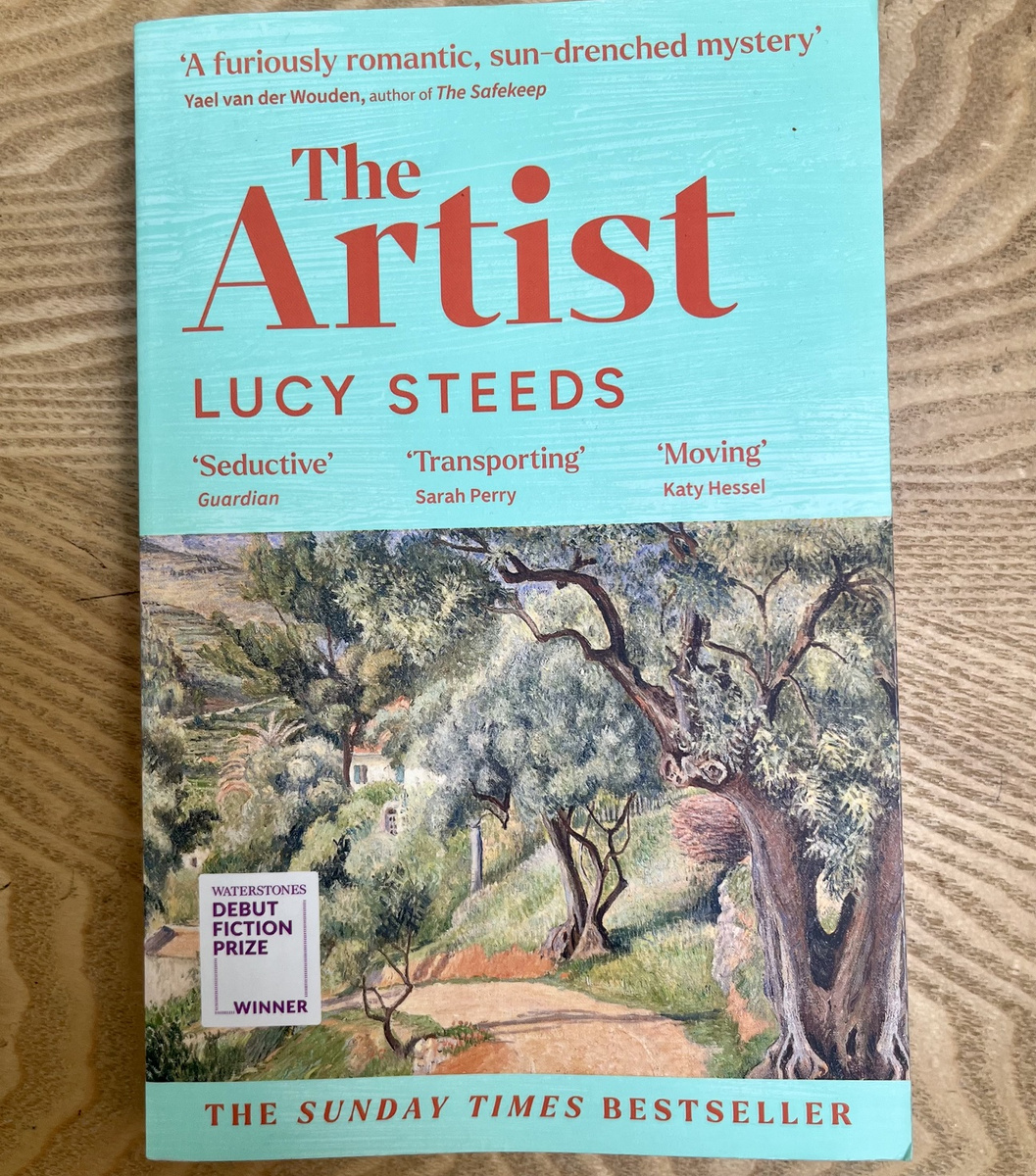
Review of The Artist by Lucy Steeds
Heady artistic creativity and flaming passions in this oppressive tale of three damaged people in a Provencal summer in the shadow of the Great War.
Story
Provence 1920. Bereaved and directionless conscientious objector Joseph steps into the world of reclusive artist Tata and his niece Ettie, to write a profile for an arts magazine. Joseph is drawn into their closed world and, by learning about painting, discovers more about himself. But his very presence upsets the balance of the household, and long-held secrets and frustrations are uncovered.
Setting
The novel takes place in remote Provence over one hot summer, amid oppressive heat and dust and a household so isolated even a trip to the small village is a rare expedition. Visitors are discouraged, and Tata himself never leaves. The only respite from the sun is at night, when Joseph and Ettie can abandon their daytime pretences. Flashbacks fill in Joseph’s dysfunctional family and Ettie’s childhood and wartime nursing.
The author lingers on the process of painting. From the meticulous preparation of still life compositions, or the gathering of paints, canvas, charcoal, brushes and turpentine, to the tedium of sitting for a portrait. Food is a major theme, and the malleability of rotting fruit reflects the layering of oil paint on canvas.
Although Tartuffe/Tata is not based on a real person, there is a strong flavour of the era, as those damaged by the Great War seek solace in nature and creativity.
Characters
Joseph is a lost soul, mourning his mother and missing his brother, who suffered shell shock after the trenches of the Great War. Through writing about Tata he discovers a new love of art, after dropping out of the Slade. He grows in confidence and purpose as the summer progresses.
Tata is nearly a caricature of the grumpy and selfish artist, demanding that Ettie cooks and cleans for him as well as acting as his studio dogsbody. He has talent but is intent on controlling his environment and the lives of those around him. He is jealous of Ettie’s innate artistic ability and cruelly suppresses it.
Ettie was seven when her mother died and has only ever known her life here with Tata. Her brief escape as a wartime nurse only led to deeper heartbreak. Joseph’s arrival stirs passions in them both, but it is evident that for Ettie, expressing her art will always come first.
My opinion
The writing is lush and sensuous, contrasting the squalor of Tata’s household with the beauty of the paintings he produces. It is not hard to guess how the power relationships between the three main characters will play out, but it is a very pleasurable journey the author leads us through.
I read The Artist over one sunny weekend, so the intensity of the story was perhaps heightened by consuming it in large chunks. Anyone drawn to the real-life stories of painters like Cezanne, Gauguin and Van Gogh will greedily consume the detail of the artistic process. But there is also a subtext of male protection verging into control and the suppression of female artists in the early 20th century, and so Ettie’s flowering in the final chapters is hugely satisfying.
Author: @lucysteeds on instagram
Winner of the Waterstones debut prize 2025
Longlisted for the Women’s prize for fiction 2025
Enjoyed this review?
Join my book club for monthly updates on new reviews and a behind the scenes look at writing historical fiction