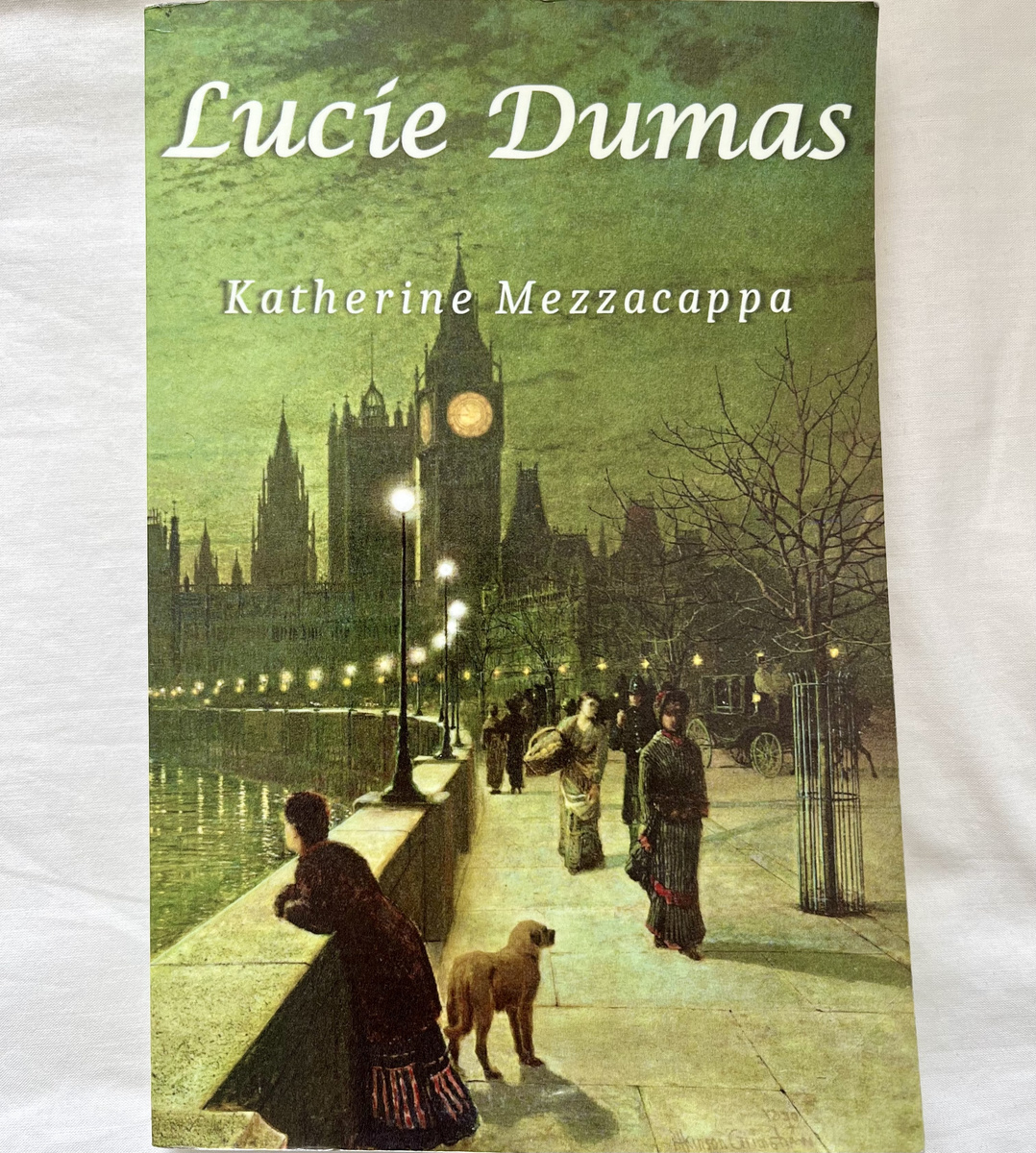
Review of Lucie Dumas by Katherine Mezzacappa
A spirited young Frenchwoman, tricked into prostitution in Victorian London, carves out an unorthodox life while yearning for her missing child.
Story
London 1871. A young Frenchwoman is persuaded by her erstwhile lover to hand over their baby and be exiled to London. Lucie is unwittingly drawn into working in a brothel where “respectable” Englishmen pay for the “services” of foreign girls. Escaping this life is more challenging than Lucie expects. Her later incarnation as mistress to writer Samuel Butler is a step up, but Lucie still faces the hypocrisy of Victorian society and a heartrending search for her brother and long-lost son.
Setting
The novel exposes a side of Victorian London rarely seen: the de facto enslavement of young foreign women, trafficked into sex-work and reviled by society. A world where a single female cannot earn a living as a seamstress without accepting the occasional “caller”, where middle-class men take advantage of domestic servants then discard them, where religious institutions that purport to rescue “fallen” women punish them rather than their male clients, and the spectre of an ugly and painful death from syphilis stalks the dark streets.
Katherine Mezzacappa's research has been meticulous - while she has imagined details of Lucie's life, the situations she faces were common to foreign women in her situation.
Character
Lucie is a pragmatic and resourceful person, accepting the world she has to live in while plotting how to escape exploitation and find her brother, all the time yearning for her lost child. She forges strong sisterly relationships with her fellow women and is devastated when they fall further into sickness or despair.
Much of the story is narrated by Lucie, writing during her decline from consumption. At first her timeline meanders, but once into the middle section of the novel, the pace picks up, and the upheavals and injustices of her life roll out chronologically.
The secondary narrator is Louis Vintras, a doctor who discovers Lucie’s diary in 1928, after her death, and tracks down some of the people she was connected to. In the paperback version, Louis’ chapters are set in italics. The font is already small for Lucie’s own chapters, and readers may need to seek a strong light or use reading glasses.
My opinion
As I read, I became increasingly angry at Lucie’s plight and the hypocrisy of “respectable” society – women as well as men. How many other girls were trafficked into 19th century London to be carelessly used by men who treated them as little more than livestock? And how many domestic servants were seduced by the man of the house amid bourgeois Victorian furnishings, then evicted to the streets in disgrace?
Lucie Dumas is a novel about one unfortunate woman, badly treated by a succession of outwardly respectable Victorians. But it raises questions about trafficking and the hypocrisy of the bourgeoisie towards sex-workers that echo through to our own time.
Published by Stairwell books
Author website https://katherinemezzacappa.com/
Enjoyed this review?
Join my book club for monthly updates on new reviews and a behind the scenes look at writing historical fiction