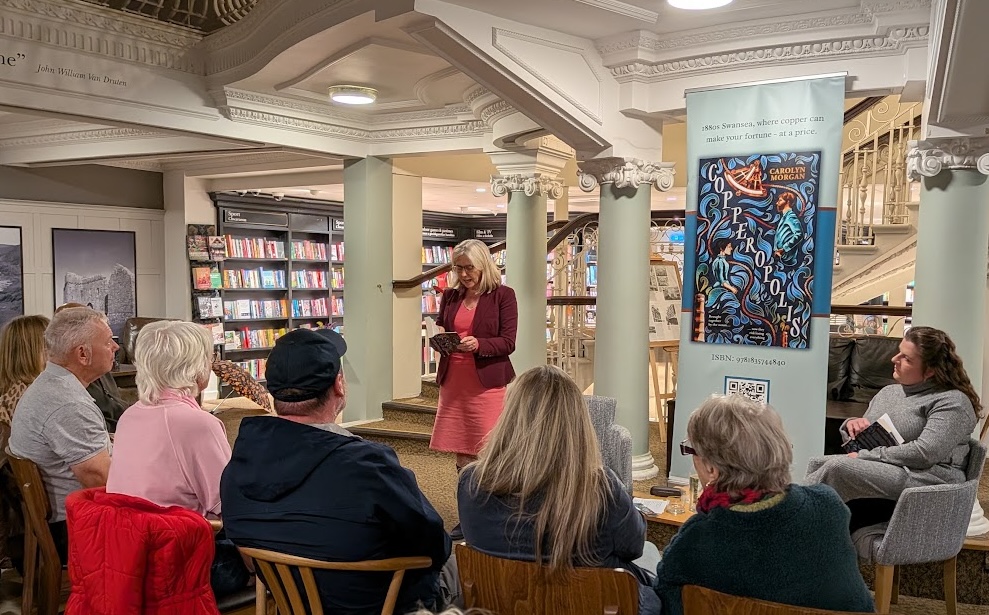
Swansea Waterstones Copperopolis event Carolyn Morgan and Rebecca F John
My novel Copperopolis is set in 1880s Swansea, so it felt appropriate to hold an event in Waterstones Swansea on 21 October.
The host was fellow Welsh author Rebecca F John, who came up with thought-provoking questions after reading Copperopolis.
We mixed up our conversation with short readings and took questions from the audience.
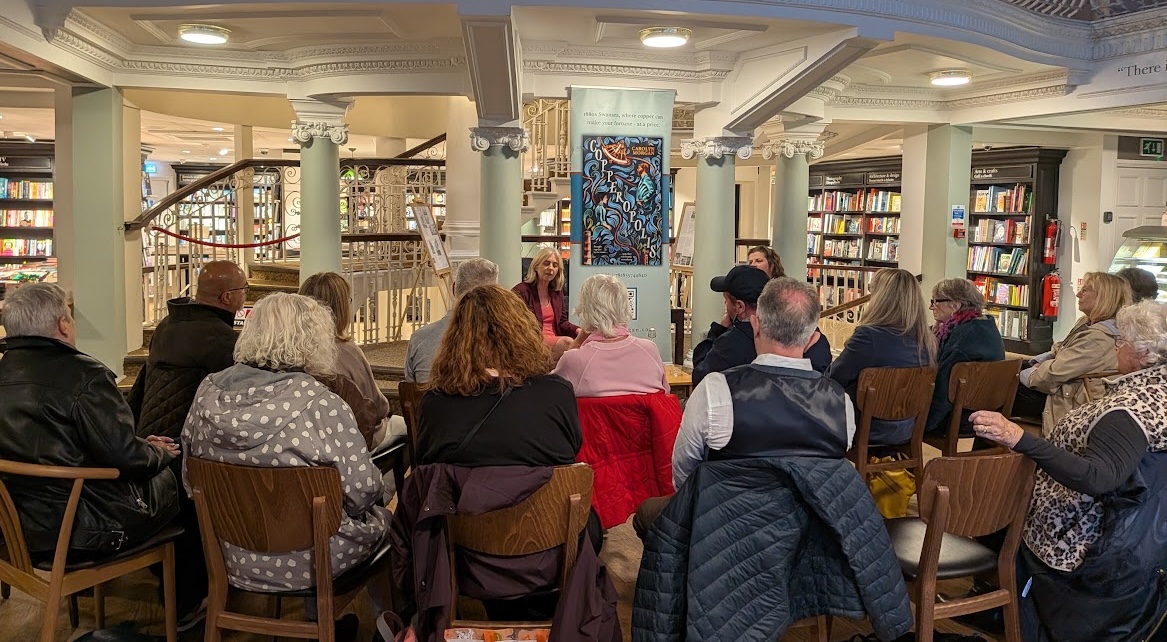
These were some of the themes we explored:
Creating characters from real people
Copperopolis is inspired by my great great grandparents John Clement and Margaret Morris. As a master mariner, it was easy to construct John's sailing career, ships and voyages. I had less insight for Margaret - only scraps of comments from family members and letters. I used contemporary accounts of other Cape Horners and their families to help me inhabit John and Margaret's world and consider how they might act and the choices they might make.
Building settings from local knowledge and research
I have been visiting family in Gower and Swansea my entire life. So the landscapes are vivid in my mind. I topped up this knowledge with maps, paintings and photos of the time to construct the docks and streets of Swansea during the copper boom
Surprises in research that shape the story
As a keen amateur sailor, I approached the story from the experiences of John as a master mariner and Cape Horner. But as I dug into the history of the copper boom, I uncovered the shocking story of the "copper smoke" and the pollution that contaminated farmland and choked workers. I decided I had to build this into the narrative and explore why many in town who benefited from the copper economy were reluctant to challenge the smelters.
Many sailors at the time were superstitious about women at sea, but in fact many masters brought their wives on voyages, and a number of women taught navigation. So I chose to weave this into Margaret's story, as family lore said that she did sometimes sail with her husband.
How a dual narrative builds suspense
I chose to alternate chapters from John and Margaret's point of view. When he was away at sea, communication was very limited. Situations where the reader knows something about one character and the other character does not are good for building suspense in a story.
Why read historical fiction?
19th century history is within reach, as our own grandparents would have known the people who lived through those times. Historical fiction can fill in the gaps that academic history cannot: providing readers with a chance to walk in the shoes of our ancestors and understand their lives and their choices.
This can also lead to a realisation that they were not so very different from people today: ambition, jealousy, competition, family and relationship conflict are eternal issues.
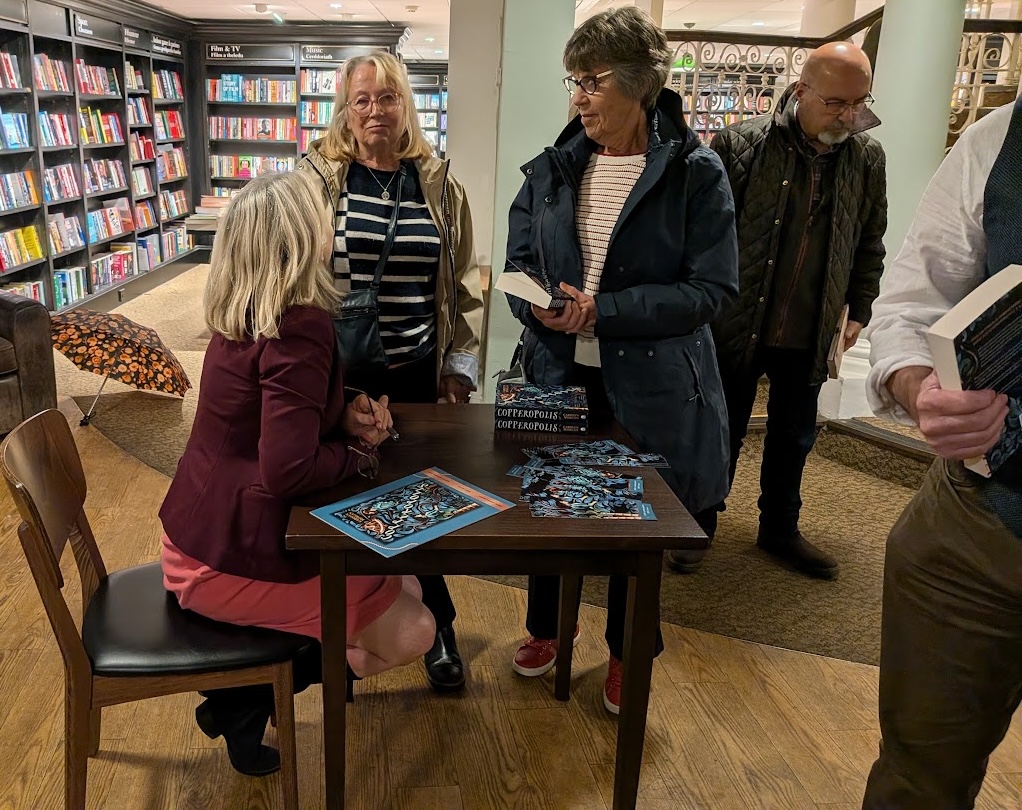
Why book events nurture authors' creativity
What I love about conversational book events is that it makes me think more deeply about my own book, and the effect it has on people who read it.
And in the signing queue I chatted to readers about their own personal connection with the landscape and history of Swansea and Gower.
So for authors a book event isn't just about selling books on the night - it's a way of connecting with readers and understanding how they respond to historical fiction.
Full list of my upcoming events - in Swansea and London .
The story behind Copperopolis
My novel Copperopolis is based on the life of John Clement, master mariner and skipper on the copper trade to Chile around Cape Horn.
Read more about Swansea history on my blog
Join my book club for reviews and recommendations on historical fiction and Swansea history